
Why Kotlin Multiplatform Is Changing Cross-Platform App Development
In a world where users expect seamless experiences across Android, iOS, web, and desktop, developers are constantly searching for smarter ways to build apps without duplicating effort.
Enter Kotlin Multiplatform — a modern approach that lets you share code across platforms without sacrificing native performance or flexibility.
🌍 What Is Kotlin Multiplatform?
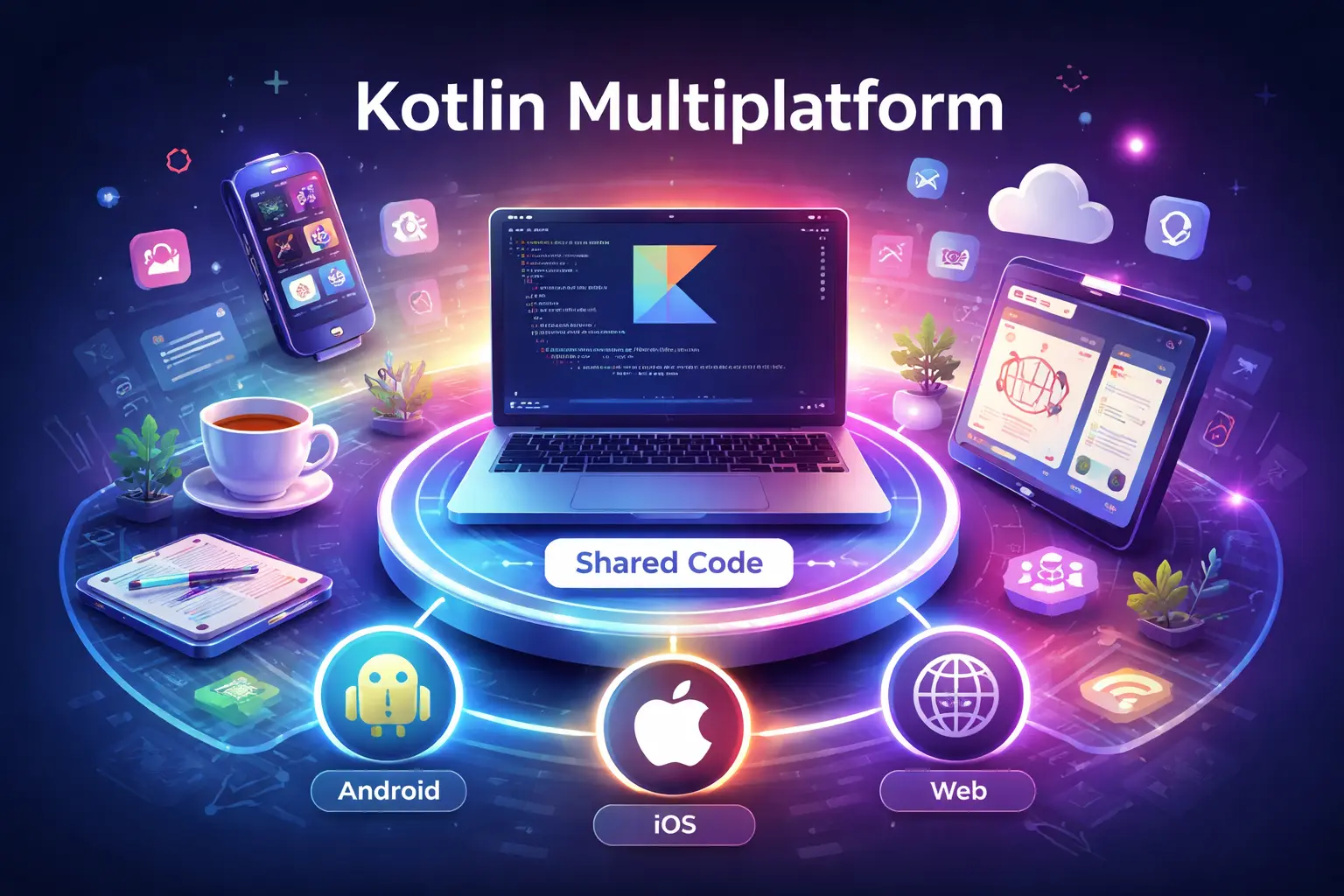
Kotlin Multiplatform (KMP) is a technology that allows developers to write shared business logic once and reuse it across multiple platforms — while still building native UIs for each platform.
Traditional approach:
- Android → Kotlin / Java
- iOS → Swift / Objective-C
With KMP:
- Shared logic → Kotlin
- Platform-specific UI → Native tools
This means you write less repetitive code while still delivering fully native apps.
⚡ Why Developers Are Switching to KMP
1. True Code Sharing (Without Lock-In)
Unlike fully cross-platform frameworks, KMP doesn’t force you into a single UI system. You choose what to share:
- Networking
- Data models
- Business logic
- State management
And keep platform-specific parts where they belong.
2. Native Performance, Always
Because your UI remains native:
- Android uses Jetpack Compose or XML
- iOS uses SwiftUI or UIKit
There’s no heavy rendering bridge or compromise — your app feels exactly like a native one.
3. Faster Development Cycles
Fix a bug once → it’s fixed everywhere.
Add a feature once → available across platforms.
This drastically reduces:
- Development time
- Maintenance costs
- Risk of inconsistencies
4. Scales from Startup to Enterprise
KMP works whether you're:
- Building an MVP quickly
- Maintaining a production-grade application
- Scaling a multi-team architecture
More companies are adopting it to streamline mobile development.
🧠 How It Works
A typical KMP project structure looks like this:
├── commonMain
├── androidMain
└── iosMain
Breakdown:
- commonMain → Shared business logic
- androidMain → Android-specific code
- iosMain → iOS-specific code
You write core logic once in commonMain, then implement only platform differences where needed.
🔧 Real Use Cases
Kotlin Multiplatform shines in apps that need consistent behavior across platforms:
- 📱 Social & communication apps
- 🏃 Fitness & sports platforms
- 🛒 E-commerce apps
- 💰 Fintech dashboards
- 🧠 Productivity tools
If your app has APIs, business rules, user accounts, or shared workflows — KMP is a strong fit.
⚖️ KMP vs Other Cross-Platform Solutions
| Feature | Kotlin Multiplatform | Flutter / React Native |
| UI | Native | Shared |
| Performance | High | Near-native |
| Flexibility | High | Medium |
| Code Sharing | Partial (you choose) | Most of app |
👉 KMP is ideal if you want control + native experience
👉 Other frameworks are better if you want maximum UI reuse
🚧 Challenges to Consider
KMP is powerful, but not perfect yet:
- iOS setup can be tricky (especially dependencies)
- Ecosystem is still growing
- Requires understanding of multiple platforms
But the trade-off is often worth it: long-term efficiency and flexibility.
🔮 The Future of Multiplatform Development
Kotlin Multiplatform is evolving rapidly, with strong backing from JetBrains and growing industry adoption.
As tooling, libraries, and community support improve, it’s becoming a serious contender as the go-to solution for modern cross-platform apps.
💡 Final Thoughts
Kotlin Multiplatform isn’t about replacing native development — it’s about enhancing it.
It gives teams:
- The power of shared logic
- The freedom of native UI
- The efficiency modern products need
If you're building for multiple platforms and want productivity without compromise, KMP might be the sweet spot.


