
Introduction
The demand for cross-platform development has never been higher. Businesses want apps that run seamlessly across Android, iOS, web, and even desktop—without maintaining separate codebases for each platform.
This is where Kotlin Multiplatform (KMP) steps in.
Unlike traditional cross-platform frameworks, Kotlin Multiplatform doesn’t force you into a one-size-fits-all solution. Instead, it gives you the flexibility to share what makes sense—while still writing native code where needed.
In 2026, KMP has evolved into a powerful and practical choice for startups, enterprises, and solo developers alike.
What is Kotlin Multiplatform?
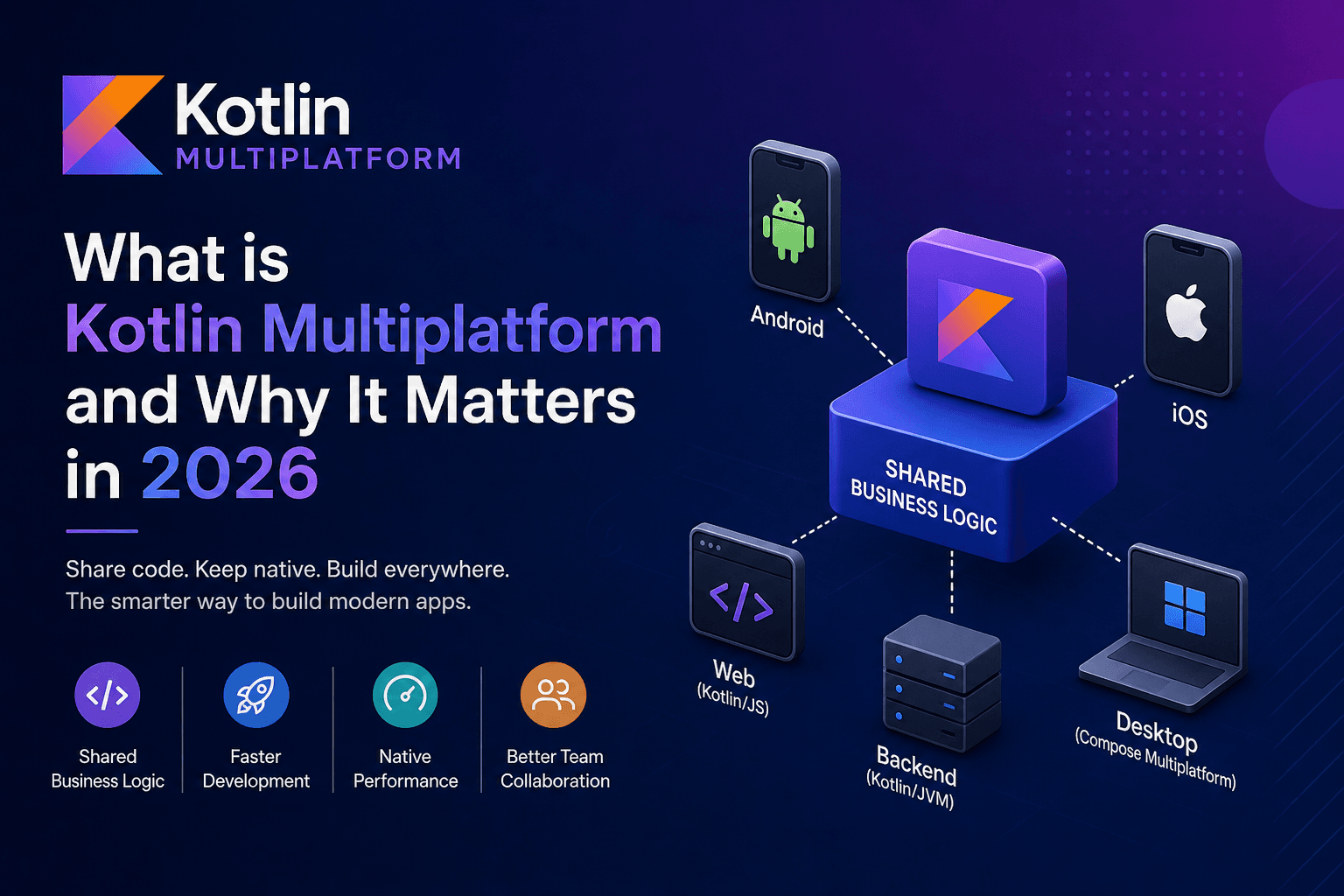
Kotlin Multiplatform is a technology that allows developers to write shared business logic once and reuse it across multiple platforms such as:
- Android
- iOS
- Web (via Kotlin/JS)
- Backend (via Kotlin/JVM)
- Desktop (via Compose Multiplatform)
Instead of rewriting the same logic in different languages (like Java/Kotlin for Android and Swift for iOS), you can write it once in Kotlin and share it.
How It Works
KMP uses a simple structure:
- Shared Module → Contains common logic (API calls, data models, business rules)
- Platform-Specific Code → Handles UI and platform-specific features
This means:
- You keep native performance
- You maintain platform flexibility
- You reduce duplicate code
Why Kotlin Multiplatform Matters in 2026
1. True Cross-Platform Without Compromise
In 2026, developers want:
- Native UI
- High performance
- Faster development
KMP delivers all three by letting you:
- Share core logic
- Keep platform-specific UI
2. Faster Development Cycles
Instead of building the same features twice:
- Write business logic once
- Use it everywhere
This significantly reduces:
- Development time
- Bugs
- Maintenance effort
3. Better Team Collaboration
With KMP:
- Android and backend teams can share code
- iOS teams still work natively
- Everyone collaborates on the same logic
This removes silos in development teams.
4. Strong Ecosystem Growth
By 2026, KMP has matured with:
- Stable tooling
- Better IDE support
- Libraries for networking, database, and state management
Popular tools include:
- Ktor (for networking)
- SQLDelight (for database)
- Compose Multiplatform (for UI if needed)
5. Ideal for Modern Architectures
KMP fits perfectly into:
- Clean Architecture
- Modular systems
- API-driven applications
Especially useful if you’re:
- Building SaaS platforms
- Creating mobile + web apps
- Integrating with backend APIs (like Laravel)
When You Should Use Kotlin Multiplatform
KMP is perfect if:
✅ You have both Android and iOS apps
✅ You want to reduce duplicate logic
✅ You care about performance
✅ You already use Kotlin
When You Might Avoid It
KMP may not be ideal if:
❌ You want a fully shared UI instantly
❌ Your team has zero Kotlin experience
❌ You’re building a very small one-platform app
Future of Kotlin Multiplatform
Looking ahead, KMP is becoming a core part of modern development:
- More companies are adopting it in production
- Tooling is becoming smoother
- Compose Multiplatform is expanding UI sharing possibilities
It’s not just a trend—it’s a long-term shift in how apps are built.
Conclusion
Kotlin Multiplatform is redefining cross-platform development by offering the best of both worlds:
- Shared logic
- Native performance
- Platform flexibility
In 2026, it stands out as one of the smartest choices for developers who want efficiency without sacrificing quality.


